

1. What can an AI Agent do for you?
YCloud AI Agent supports customer service, sales, and business automation on WhatsApp. Common scenarios include:- Customer Service: 7×24-hour automated answering of common inquiries, handling of queries, and soothing of complaints to relieve the pressure on human customer service staff.
- Sales and Customer Acquisition : proactively welcome visitors, guide them to leave contact information, recommend products, follow up with potential customers, and improve lead conversion.
- Business Handling: Self-service query of orders, account information, business handling, and information verification to shorten service paths.
- Unsubscribe Management: Automatically execute unsubscribe operations, accurately respond to user unsubscribe requests, avoid non-compliant outreach, reduce complaint rates, and ensure account quality.
2. Flow: Standardized process, easily achieve automation
Flow is suitable for fixed, linear, and well-defined business scenarios. Through visual drag-and-drop configuration, it automates business processes and reduces maintenance costs.Core Application Scenarios
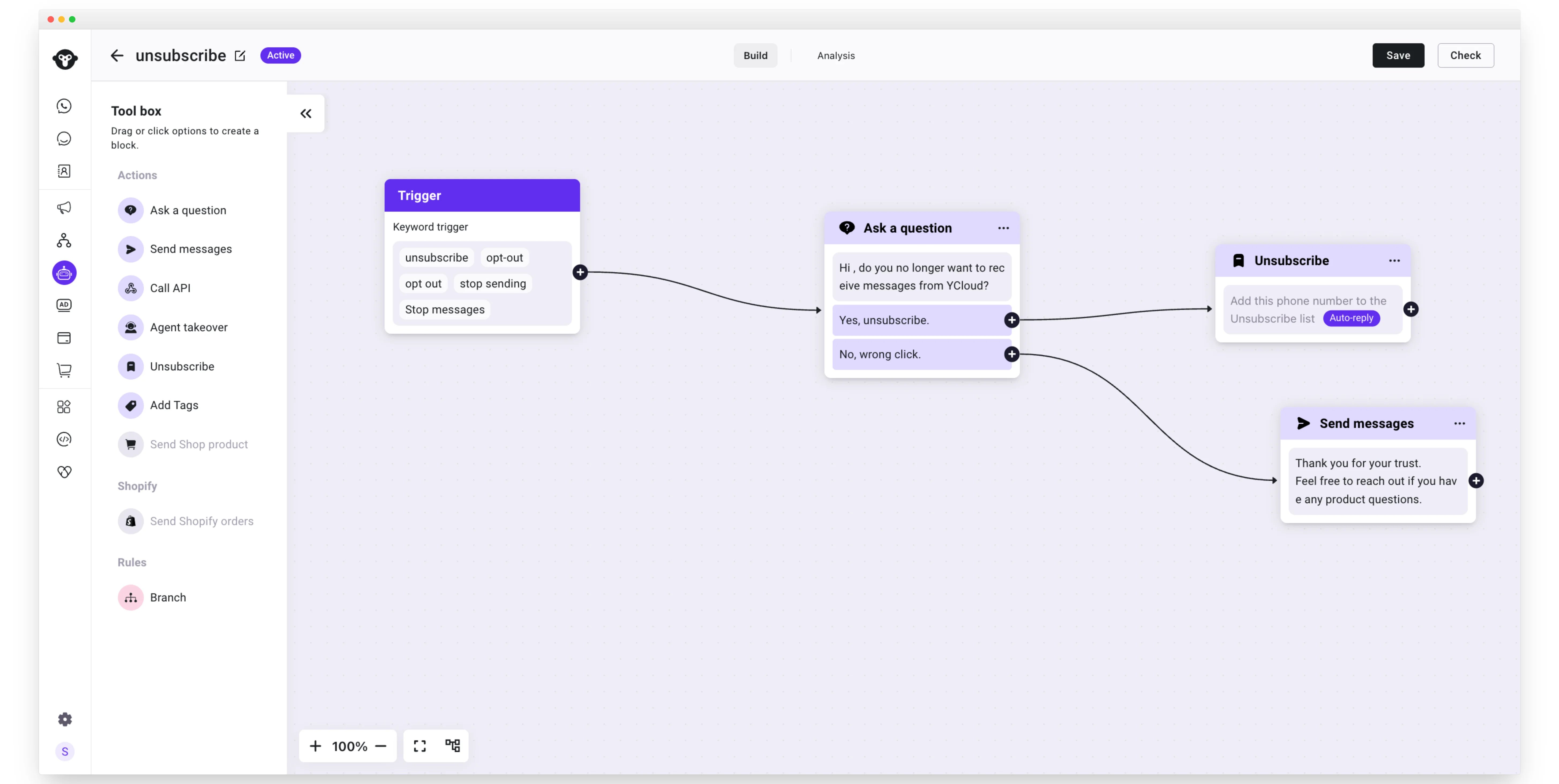
- Automatic Unsubscribe Management
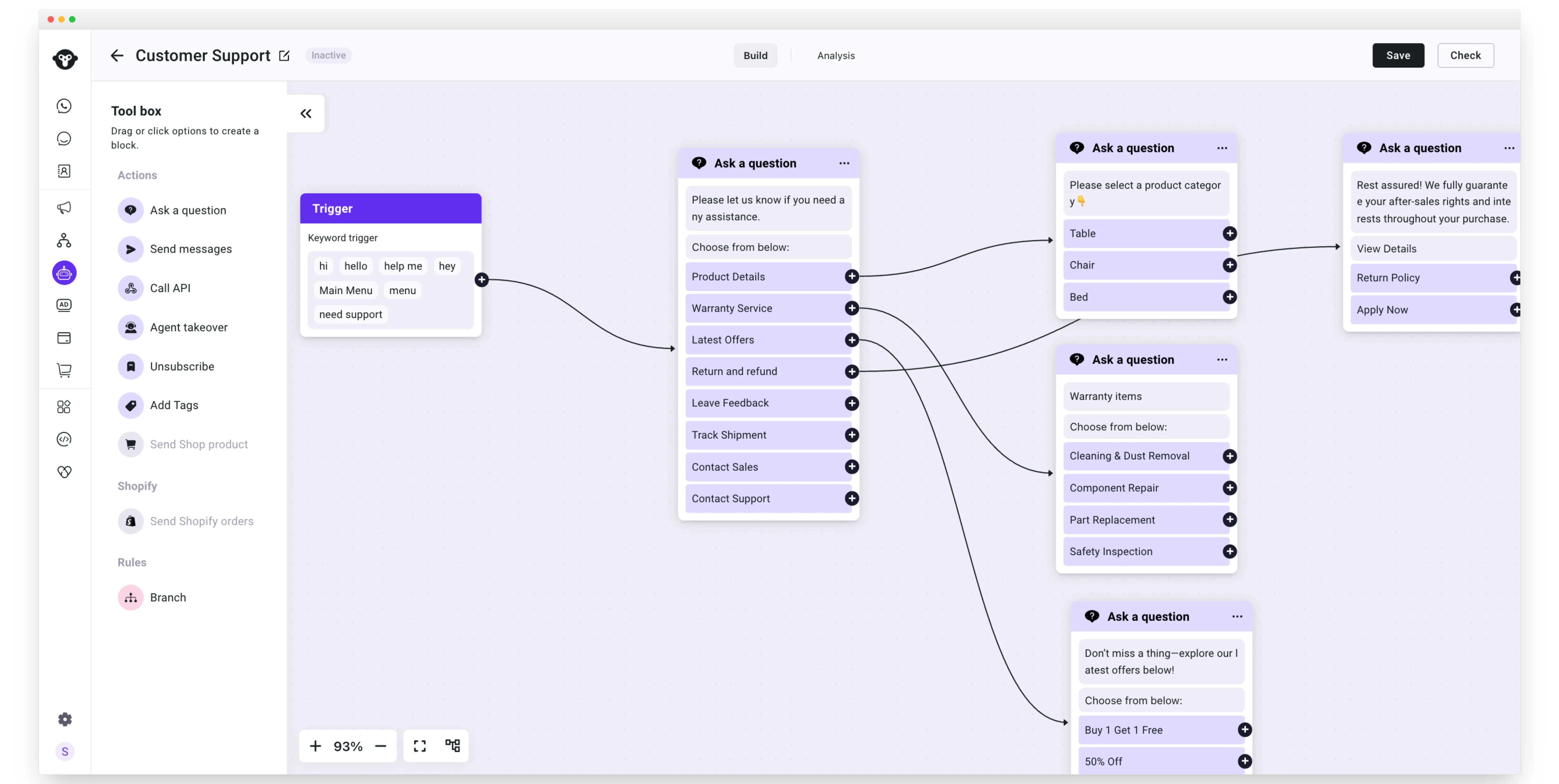
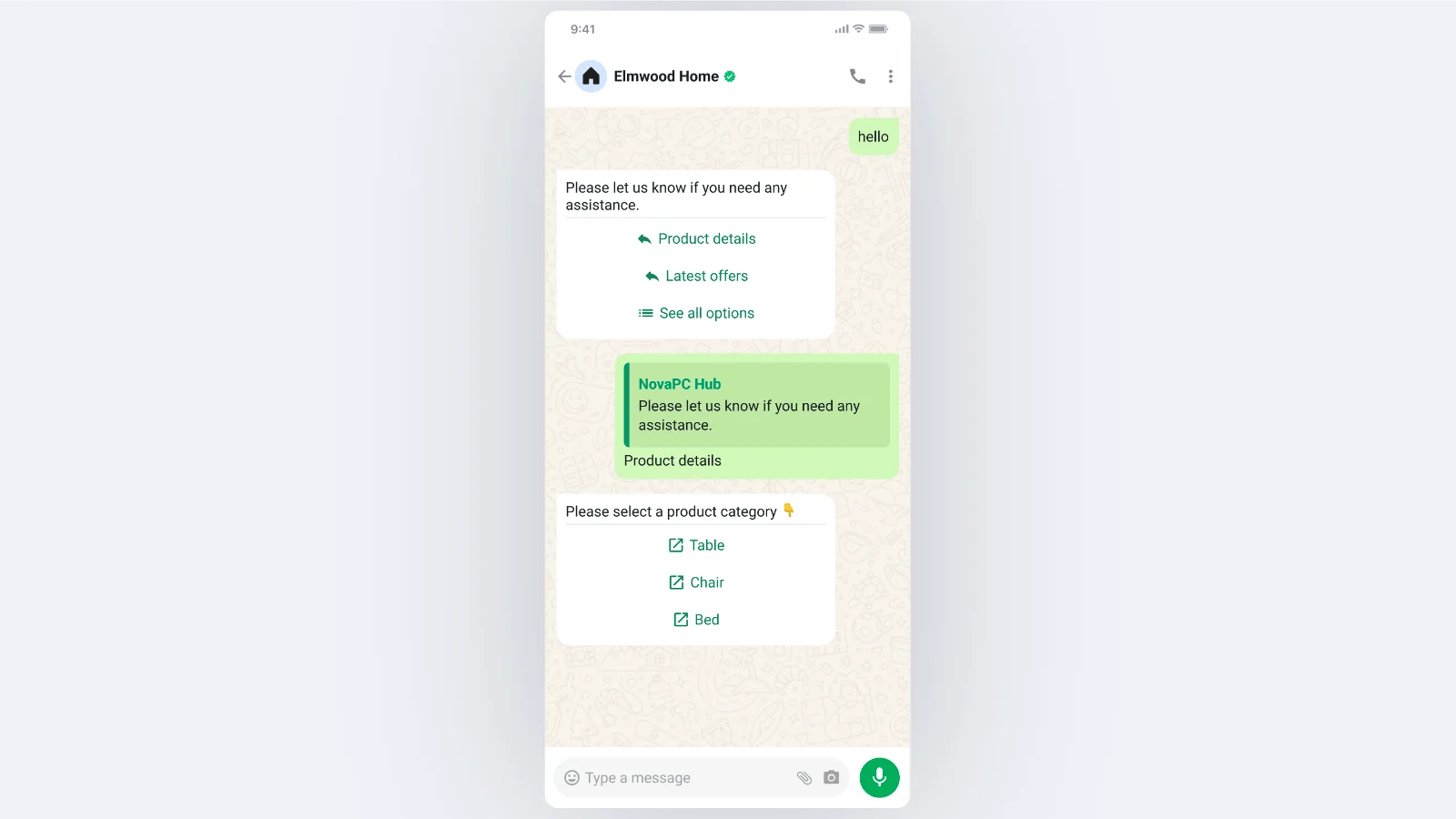
- Automatically send the main menu via the welcome narrative
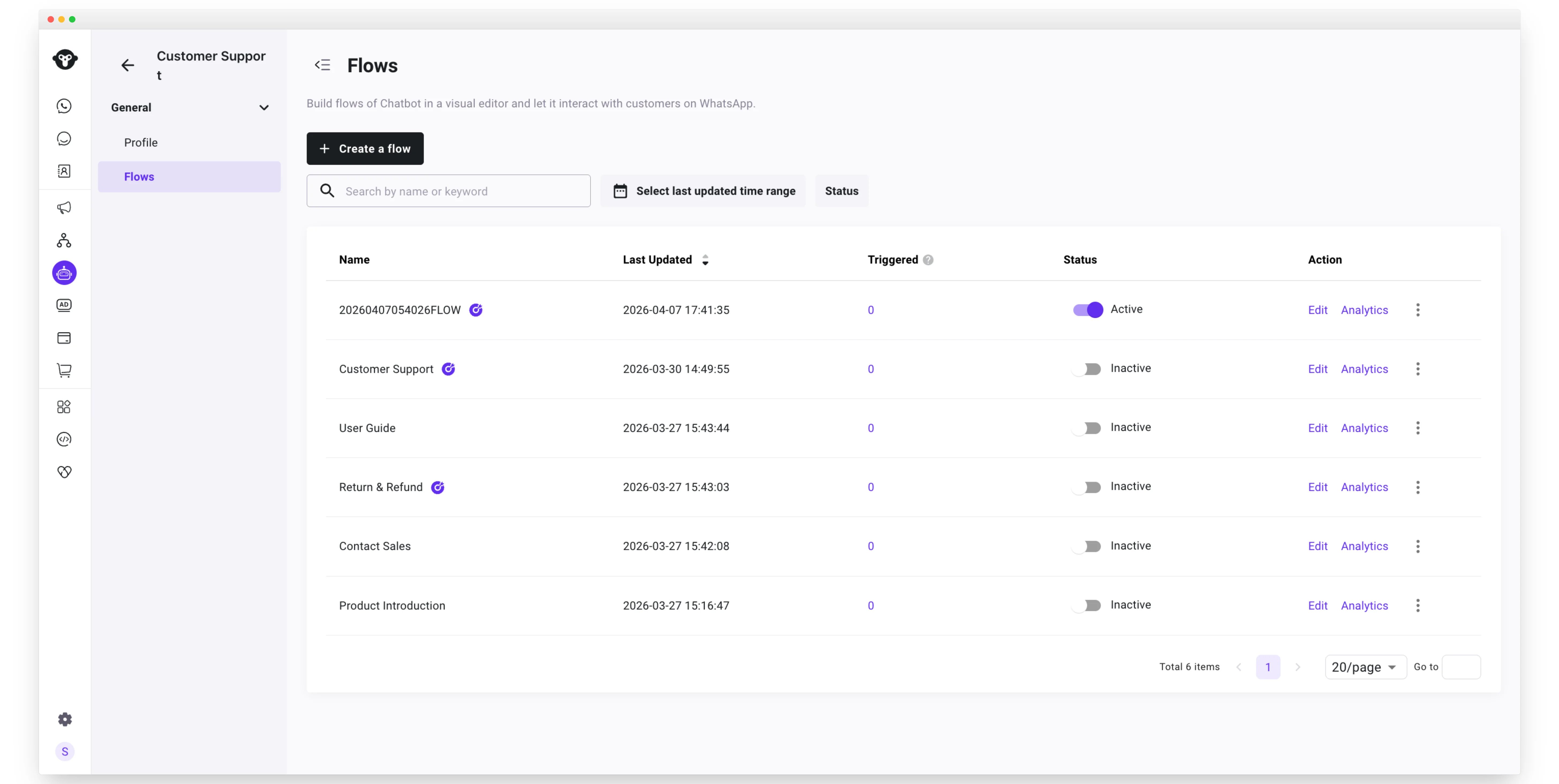
- Reduce maintenance costs with reusable rule-based agent flows
3. AI Agent: Intelligent and Efficient Response to Complex Scenarios
AI Agent has the capabilities of intent understanding, logical judgment, and multi-step task execution, is suitable for scenarios requiring flexible interaction and complex decision-making, and can proactively guide, make autonomous decisions, and call tools to complete tasks.(1) Practical Scenarios
- Intelligent Customer Service: Answers multi-dimensional inquiries, handles complaints, resolves complex issues, supports context memory, and enables anthropomorphic interaction.
- Automatic lead capture: Actively guide users to provide information such as name, phone number, and requirements.
- Intelligent Shopping Guide: Understand user preferences, recommend products, answer questions about specifications, guide order placement, and simulate exclusive shopping guide services.
(2) Recommended Configuration Steps
- Select the appropriate Role

Choose a role that matches the task. This example shows Customer service.
- Configure Profile

Configure the agent identity and instructions, then use Preview to test the behavior.
- Configure Knowledge Base

Select Add knowledge to choose a document, website, Q&A pair, or attachment.
- Configure Skills

Define when the Skill should start, then write its step-by-step instructions.
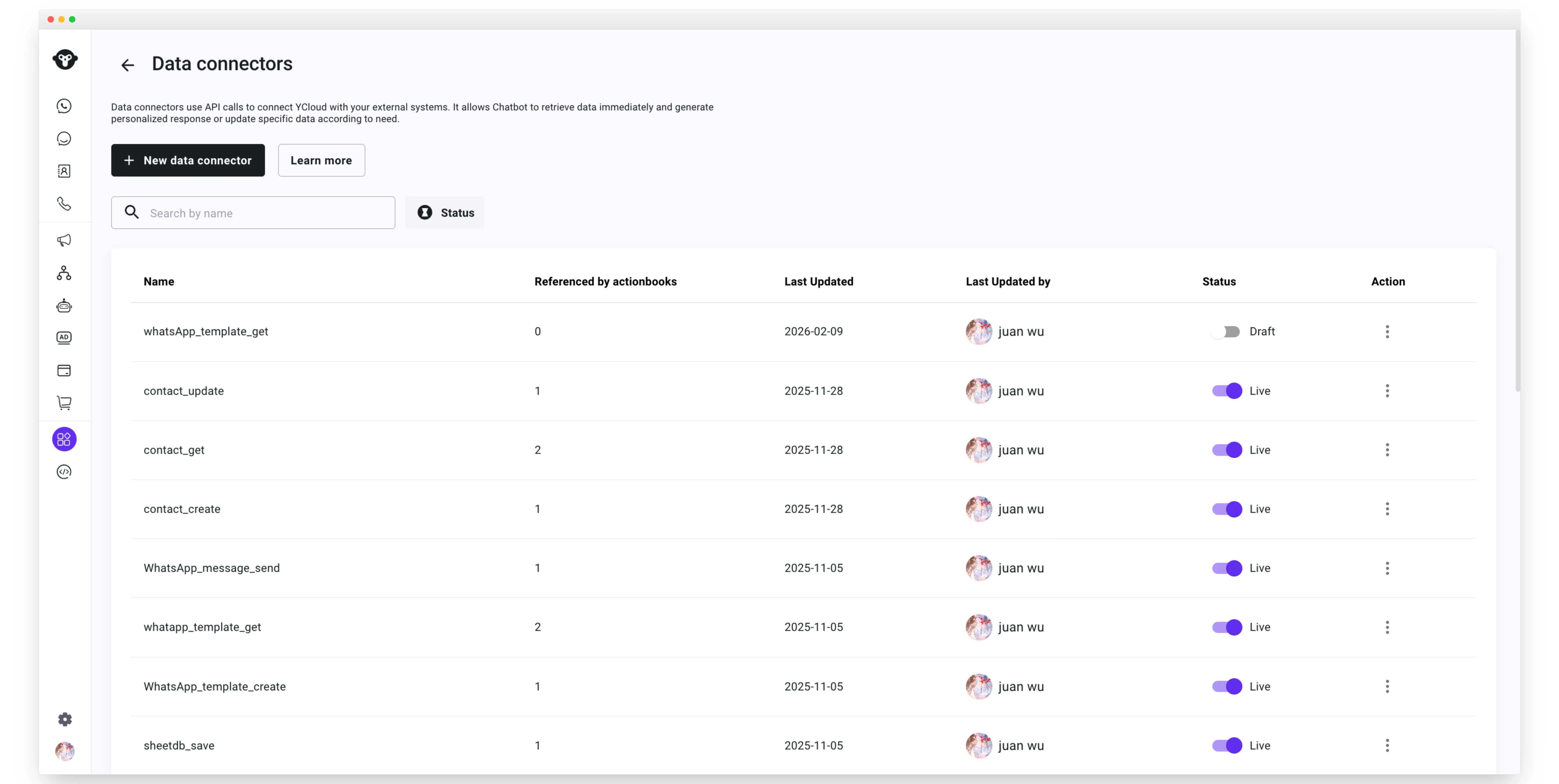
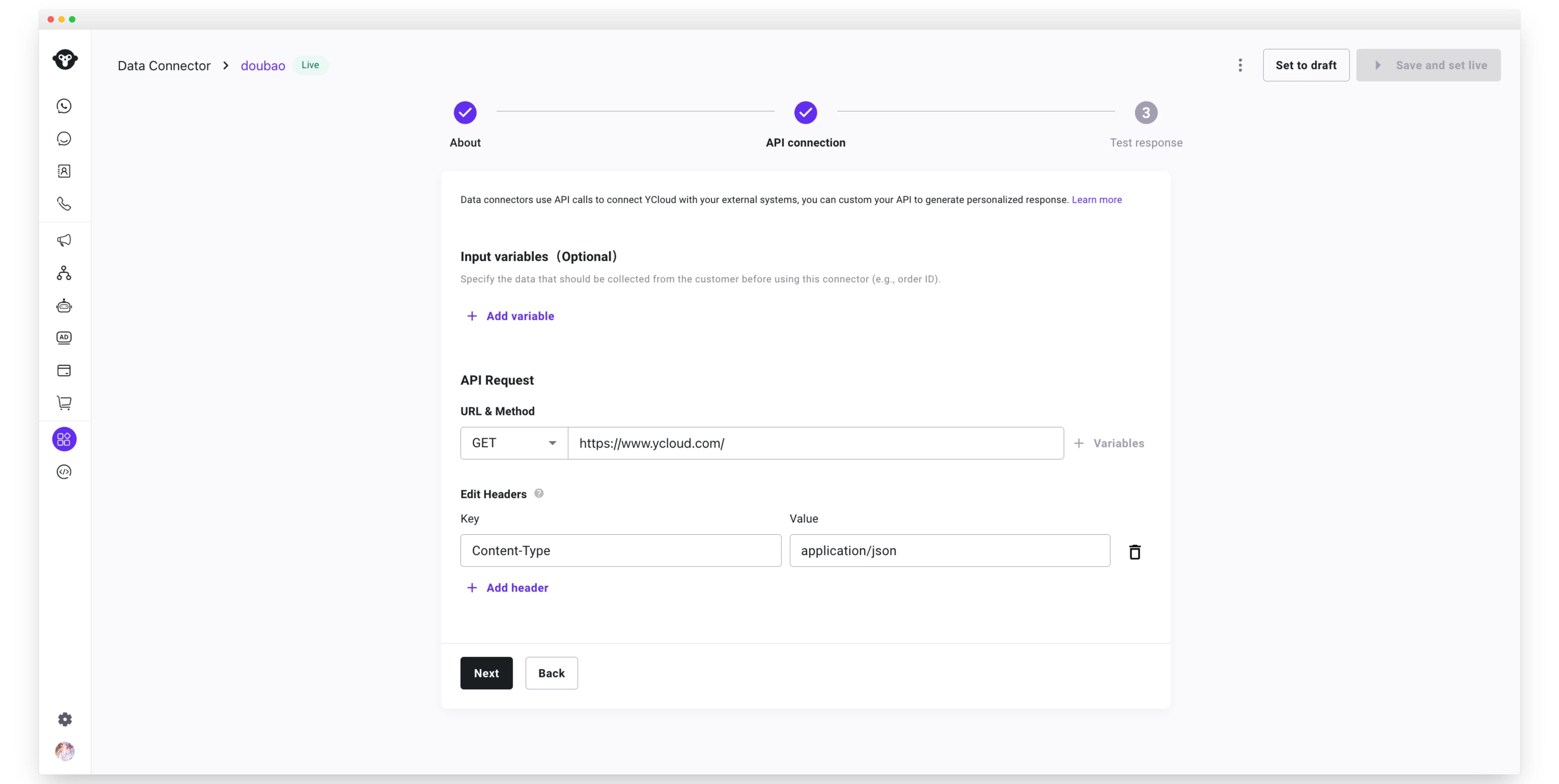
- Configure Allocation Rules

Select AI Agent under Assign to for the business number that should use it.
(3) Best Practices
1. Clarification of Task Instructions (Recommended Practices vs. Non-Recommended Practices) ① Lead Generation Scenario- ❌ Not Recommended Practice: “You should collect customer information and then store it.”
- ✅ Recommended Practice: “You are a loan product lead collection specialist, required to politely guide users to provide their name, contact phone number, loan amount, and location. After collecting all the information, synchronize it to the CRM. For any missing information, ask for it one by one to ensure no fields are overlooked.”
- ❌ Not Recommended Practice: “Just help the client solve problems.”
- ✅ Recommended Practice: “You are a financial customer service representative, responsible for answering questions related to account inquiries, repayment, rates, etc. Reply strictly according to the Knowledge Base, do not promise content beyond the scope, soothe customers first when encountering complaints, and transfer to human service when unable to resolve issues.”
- ❌ Not Recommended Practice: “You recommend products to customers and ask them to buy.”
- ✅ Recommended Practice: “As an e-commerce shopping guide, first inquire about the user’s needs, budget, and preferences, recommend 2-3 matching products, explain their advantages, prices, and specifications, guide the user to place an order when they hesitate, and promptly inform them in case of inventory issues.”
- Classification Management: Classify by product, business, and FAQ to facilitate accurate retrieval by AI.
- Content Guidelines: Answers should be concise, accurate, and unambiguous; industries such as finance need to include compliance reminders.
- Dynamic Update: Regularly synchronize new policies and products, remove expired content, and ensure information timeliness.
- Supplement unknowns: When AI is unable to answer, record the question and supplement it manually, continuously optimizing the Knowledge Base.
- Define Scenarios: Only configure necessary interfaces, such as configuring “Account Inquiry” for the customer service scenario.
- Specification Parameters: Define request/response parameters, clarify field meanings, formats, and required fields to avoid call failures.
- Exception handling: Set up retry on failure and error prompts, such as “Query failed, please try again later”, to enhance the user experience.
- Permission control: Restrict sensitive operations, add manual review nodes for financial scenarios to avoid risks.
4. Example: Financial customer service
A financial services team can use an AI Agent to answer common questions, collect lead details, and hand complex or sensitive requests to a human agent.Recommended configuration
- Profile: Define a professional, patient role and state which financial topics the AI Agent must not answer without approved information.
- Knowledge base: Add current product, repayment, fee, and complaint-handling content. Remove outdated policies promptly.
- Skills: Create focused Skills for tasks such as account lookup or complaint intake. Verify identity before showing customer-specific information.
- Data Connectors: Connect only the systems required by each Skill, and define failure and fallback behavior.
- Handoff: Transfer requests that require human judgment, approval, or access the AI Agent does not have.