

Inbound and outbound calls
A normal phone-number button can launch a telephone call outside WhatsApp. A WhatsApp call button and a call-permission request are different interactions.
Confirm eligibility before designing the workflow
Availability can depend on the business number’s country, account capabilities, connection mode, and calling configuration. Check the actual number you plan to use. Do not assume that a number eligible for messages is automatically eligible for outbound calls, or that app coexistence gives you API access to app calls. Meta updates permission and calling limits. Use its Calling documentation for current upstream rules and confirm the supported setup with YCloud.Permission to message is not permission to call
Before an outbound call, obtain the required WhatsApp calling permission and check that it is still valid. A customer who subscribed to messages, received a template, or spoke with you previously should not be assumed to have current outbound-call permission. Permission requests are themselves subject to messaging eligibility and platform limits. Respect a refusal or withdrawal. Repeated unanswered calls are a signal to stop and reconsider the timing, not a reason to increase attempts.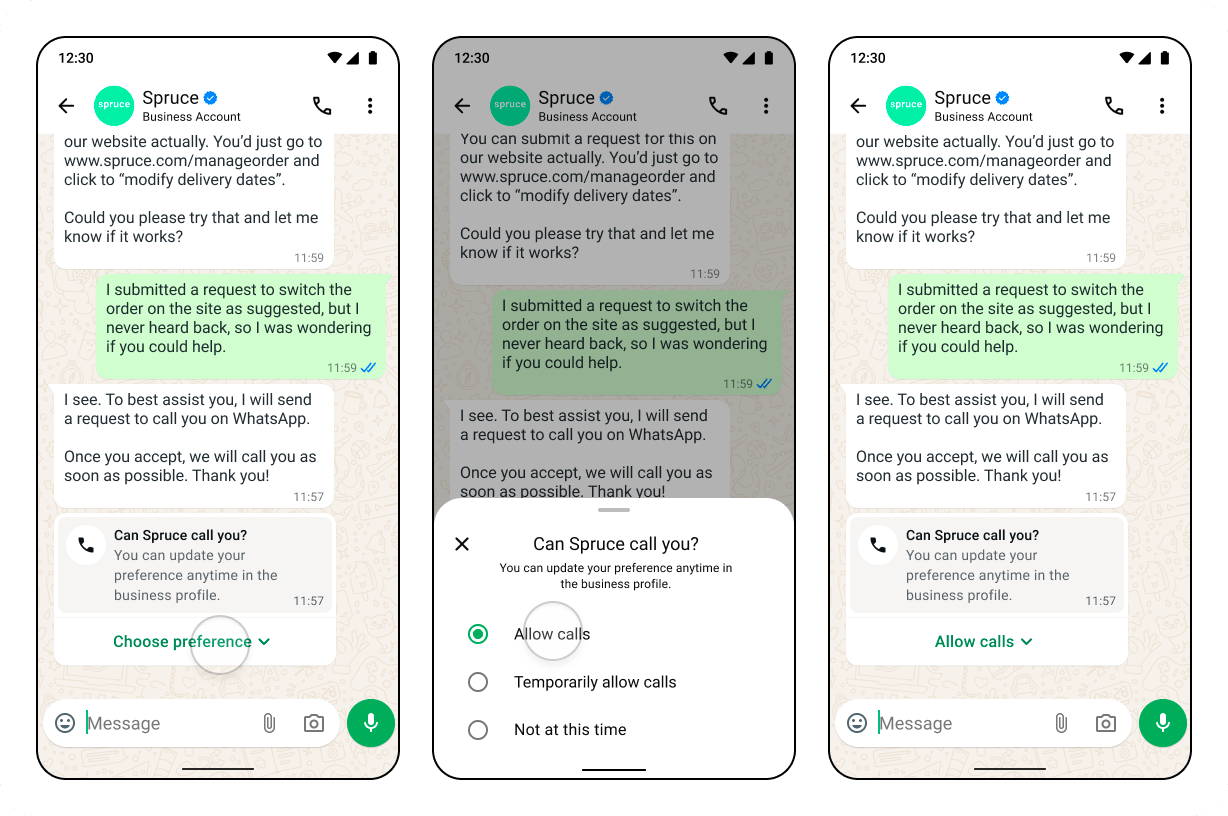
Meta example: the customer opens a call-permission request and chooses whether to allow calls. The available controls depend on the current client and eligibility.
Choose a YCloud integration
YCloud documents two approaches:- YCloud platform calling: Your team handles calls through supported console workflows.
- API integration: Your application handles call signaling and the associated media integration.
Prepare the customer and agent experience
Define:- When calling is available.
- Which team members can use the number.
- How customers reach the right team.
- What happens when a call is missed or declined.
- How a call returns to a messaging conversation.
- Whether any recording or retention requires additional notice or consent.
Set up and test platform calling
For YCloud platform calling, the current console guide uses this sequence:- Make sure the intended agents exist under Settings → Users and teams → Users.
- Open the business number’s Calling → Authority and enable Calling configuration.
- Decide whether to show Call icon visibility in the customer’s chat and profile.
- Choose the documented assignment method: random assignment to online agents or load balancing based on the lowest number of calls received that day.
- Test with an eligible number and an available agent, then review the call record in Calling logs.
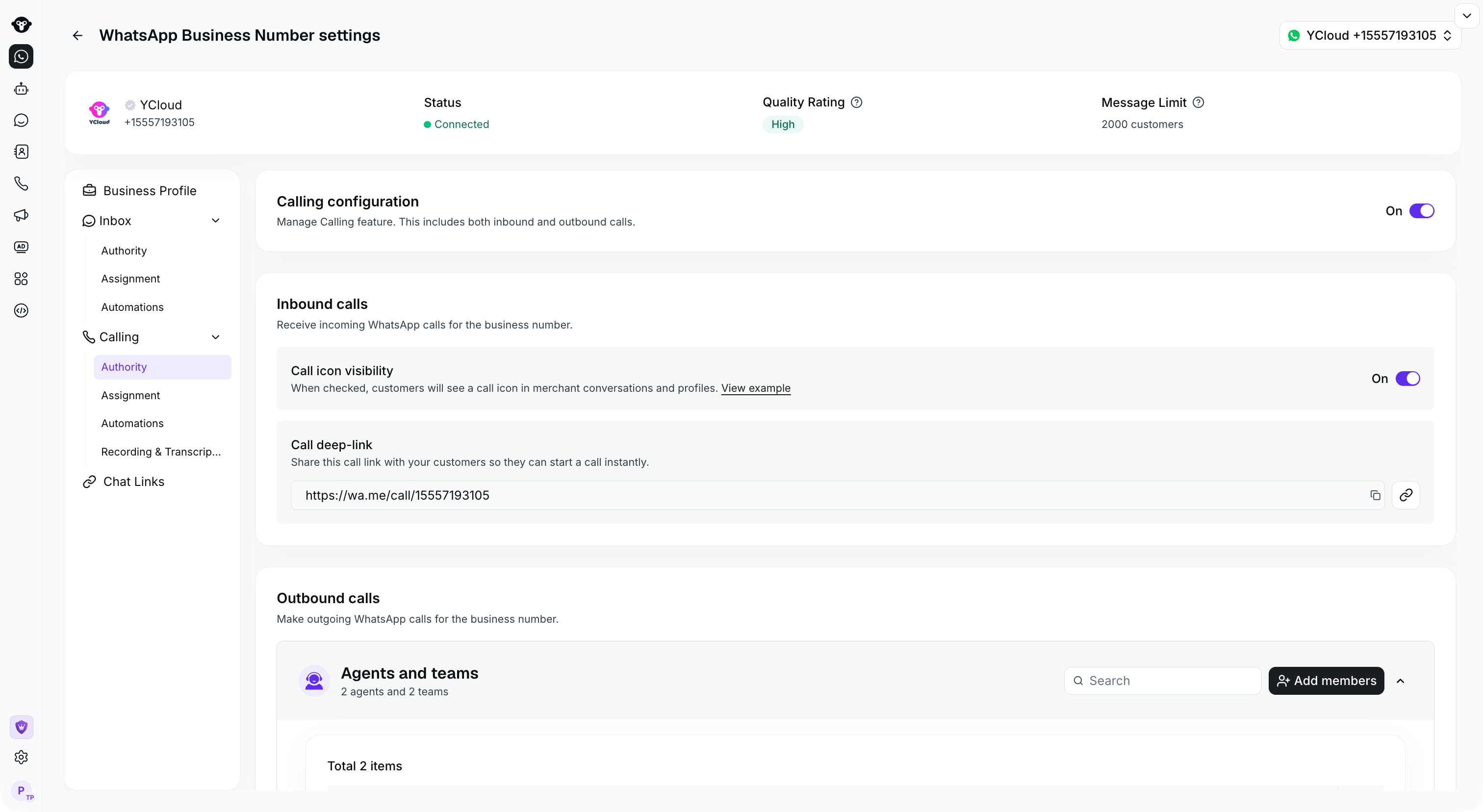
Review Calling configuration and Call icon visibility in Calling > Authority.
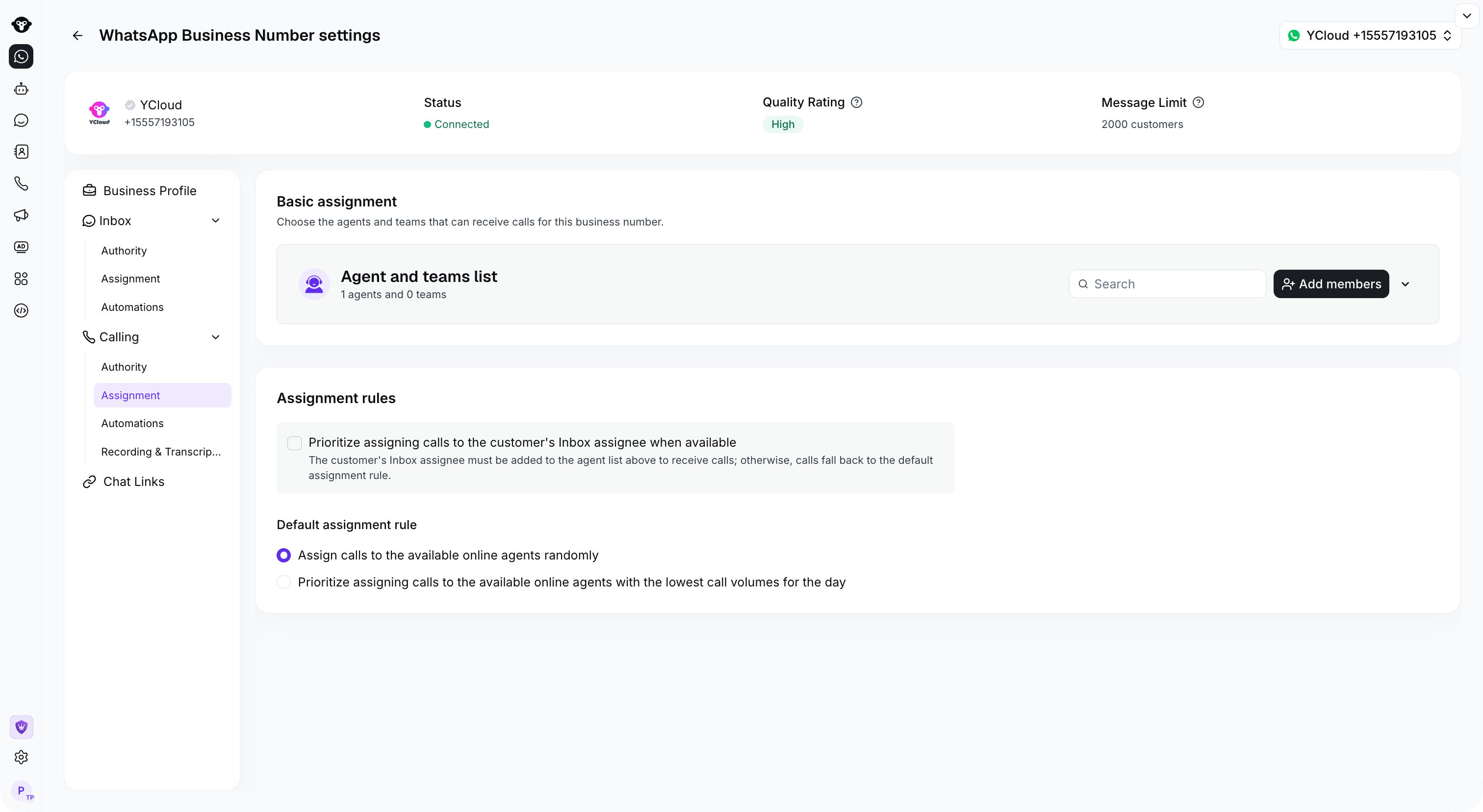
Choose the receiving agents and the default assignment rule in Calling > Assignment.
Separate permission, ringing, and connection
For an outbound call, verify these stages independently:
Test declined permission, no answer, an offline agent, microphone denial, and a dropped connection—not only a successful call.
If outbound calling is unavailable, first check country and number eligibility, current permission, connection mode, and configuration. Do not repeatedly request permission or retry calls to work around a restriction. Calling limits shown in older YCloud material and newer Meta material can differ; confirm the effective limit for your YCloud connection before building automatic retries.
Understand charges separately
Call charging is separate from template-message charging. Check your current YCloud calling rates and commercial terms before estimating costs. A free-entry-point message window should not be treated as a general exemption from calling or advertising charges. See WhatsApp pricing for the messaging model.Continue
Frequently asked questions
I hid the call icon. Why can a customer still call from a message?
I hid the call icon. Why can a customer still call from a message?
Icon visibility controls the chat/profile entry point, not necessarily every call entry point. A supported call-button message can still initiate a call. If you need to stop accepting calls, review the actual calling enablement and routing settings, not only the icon.
The call shows connected but there is no audio. Is this a permission problem?
The call shows connected but there is no audio. Is this a permission problem?
A connected call is a different stage from permission or request acceptance. Check microphone permission, the agent’s selected input/output device, network conditions, and—if using an API integration—the media setup. Use the call ID and logs to investigate the affected session instead of repeatedly requesting customer permission.